Created in partnership with Five on a Bike
Published: 22 January 2026
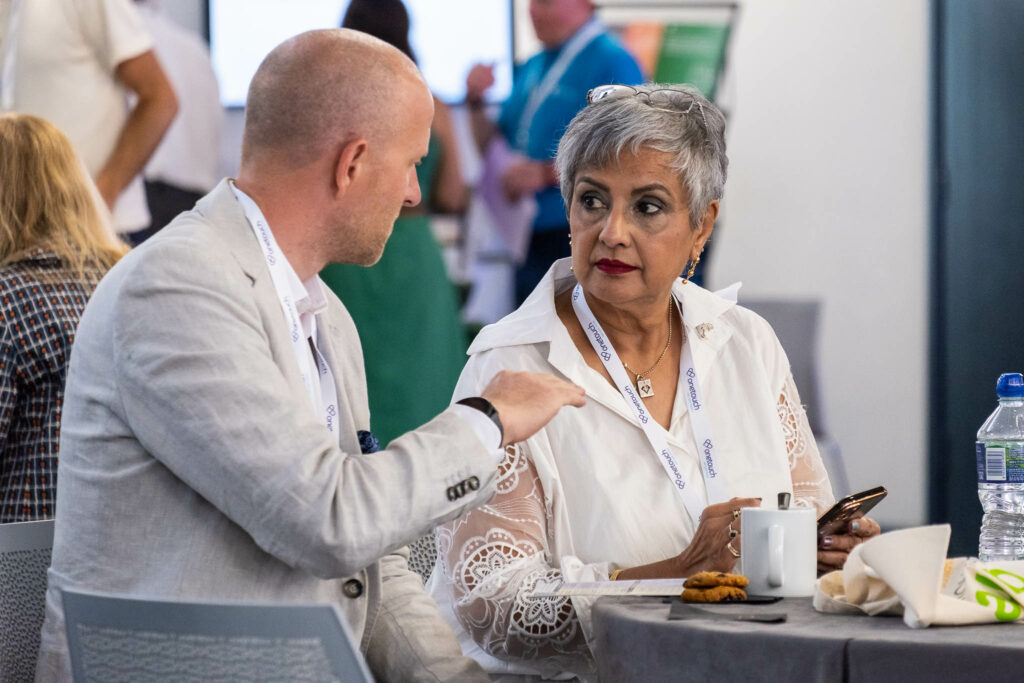
During the Care Innovation Summit 2025 in London, Nadra Ahmed, Executive Co-Chairman of the National Care Association, offered a clear and grounded perspective on the state of social care. Speaking from the Care Innovators Studio, run by Five on a Bike, Nadra challenged familiar narratives around failure in the sector and redirected the conversation towards funding, systems and practical progress.
The National Care Association represents and supports small to medium-sized care providers across the UK, while also working with some larger organisations. At the Summit, Nadra reinforced the Association’s dual role: responding to the pressures facing providers while actively championing opportunities for collaboration, innovation and shared learning. This positioning has become increasingly visible through its backing of the Providers Unite movement, now a major collective voice within adult social care.
One care sector, one voice
Providers Unite began almost by accident, following a letter Nadra wrote in response to the announcement of changes to National Insurance Contributions. What started as a single piece of correspondence quickly gained traction as organisations asked to add their names. Within days, over a hundred national and local bodies had signed on. Momentum continued to build, driven by a shared desire for alignment and clarity when engaging with government.
Today, the movement includes just under 5,000 providers, connected through a highly active WhatsApp group. Nadra described this not as a lobbying tool in isolation, but as a live space for peer exchange. Providers share operational insight, practical solutions and local intelligence. This immediate communication has proven critical in countering persistent misconceptions about capacity in social care.
When claims emerged that delayed hospital discharges were the result of care providers lacking available beds, a single message to the group generated responses within minutes. Providers were able to confirm real-time capacity across regions, enabling Nadra and her colleagues to challenge the narrative directly with the Department of Health. For Nadra, this demonstrated both the sector’s readiness to collaborate and the value of simple, provider-led data sharing.
Systems around social care, not social care itself
A recurring theme in the conversation was Nadra’s frustration with the idea that social care is “broken”. She rejected the phrase outright. In her view, providers continue to invest heavily in their services, particularly in digital systems, workforce capability and care quality.
She pointed to structural failures surrounding social care: lengthy waits for care assessments, millions of unpaid carers forced out of employment and an NHS under constant pressure. These issues, she argued, do not reflect a failing care sector, but rather a lack of joined-up systems that prevent people from moving smoothly through health and care pathways.
Nadra described social care as the sector that supports people beyond acute episodes, helping them recover, rehabilitate and live well in their communities. When the system works, it prevents readmissions and reduces long-term demand on hospitals. When it does not, blockages appear everywhere else. The solution, she stressed, is not to “fix” social care, but to fund it properly and integrate it effectively.
Investment without recognition
Drawing on her own experience running care services, Nadra reflected on how far the sector has progressed. Where paper notebooks once recorded daily updates, providers now use sophisticated digital care planning systems that improve oversight, accountability and outcomes. These advances have largely been funded by providers themselves, not by successive governments.
At the same time, regulatory, commissioning and administrative demands have grown. Small and medium-sized providers now need expertise in technology, compliance, commissioning and workforce management, often without the internal departments available to larger organisations. Accessing government funding, when available, frequently requires time-intensive applications with no guarantee of success, adding further strain.
Innovation beyond technology
Although technology featured heavily at the Summit, Nadra broadened the definition of innovation. She spoke about her involvement in the design of a new nursing home, where decisions such as installing ceiling-mounted hoists transformed dignity, comfort and efficiency for residents and staff alike. These practical design choices, while not always headline-grabbing, have a tangible impact on daily life.
Food innovation emerged as another powerful example. Advances in dysphagia-friendly food, where texture-modified meals retain their shape, taste and visual appeal, significantly improve quality of life for people with dementia and other conditions. Nadra highlighted how these developments, alongside more thoughtful dining environments, demonstrate that innovation often lies in attention to detail rather than large developments.
For Nadra, innovation becomes meaningful when it improves lived experience. Whether through better use of technology, improved environments or small but thoughtful changes in care delivery.
A sector worth backing
As the conversation concluded, Nadra returned to a central point: social care delivers value. It supports individuals to live well, costs less than prolonged hospital care and plays a vital role in preventing system-wide pressure. The sector does not need rescuing. It needs trust, investment and policy that recognises its contribution.
Her message from the Care Innovation Summit was both firm and optimistic. Social care is working. Providers are adapting, investing and innovating every day. With proper funding and joined-up systems around it, the sector can do even more of what it already does well.
To watch the full interview and hear more about the successes and challenges within the care sector, watch Nahdra Ahmed’s full interview on our YouTube channel.