Published: 7 May 2025
By Care Innovation Summit
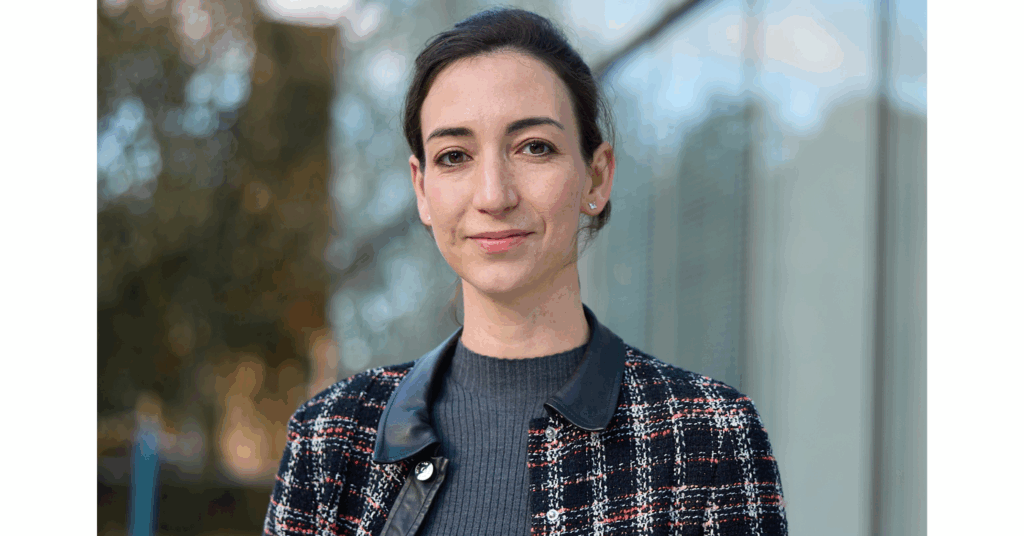
As a Director of Research and Head of Public Engagement, Caroline Green understands the impact technology has on the sector. Her research focuses on AI and human rights, specifically in the fields of health and social care and will be sharing her knowledge with you at the Business Design Centre, London this June.
Can you tell us a bit about your current research focus and what drives your interest in dementia care and technology?
Caroline: My research is about understanding what a responsible approach to using AI in social care means in theory and practice. Essentially we want to reap the maximum benefits that technology has to offer to people who draw on care and support, while also being aware and in control of the ethical risks that come with using technology in care.
I am particularly interested in dementia care because the stakes are high: If we get it right, technology has the potential to transform lives of people living with dementia and their caregivers for the better but there are also threats to peoples’ human rights, dignity, equality and access to high quality care.
This is why over the past year I have collaborated with many people from across the care community to define what the responsible use of AI in adult social care means. We have produced a white paper explaining our work and co-produced guidelines to help address a gap in policy in this sector at the moment. The resources are available here.
In your session, you’ll be unpacking how AI and machine learning are being used in dementia services – what’s one key theme attendees can expect?
Caroline: Attendees can expect some nuance when it comes to my approach to using AI and machine learning in dementia services. I will highlight some of the benefits in applications within services, but at the same time I will talk about ethical considerations related to the technology itself or the way people may (ab-) use it in dementia care contexts. I will use real life examples to unpack this.
What are some of the real-world challenges when embedding AI systems into social care environments that support people with dementia?
Caroline: There are various practical and ethical challenges. From a practical point, identifying the products that work for a particular service amongst an ever-increasing amount of software providers for social care can be an issue and of course there can be practical challenges in rolling out the technology across the services.
From an ethical point of view, there is still a gap in understanding how the potential risks related to AI interact with regulation of care services and how to ensure consistently that AI is being used responsibly in the care for people living with dementia. That is why we have co-produced guidelines on the responsible use of AI in social care to support people who draw on care and support, careproviders, careworkers and tech providers to critically reflect on their own AI practices.
How are frontline dementia professionals responding to AI implementation – and where do you see opportunities for better integration?
Caroline: Applications and experiences of AI vastly differ amongst careworkers: Some have not used AI at all in their work – at least not consciously. Others are starting to try out systems like ChatGPT and there are also some careworkers routinely integrating it into their everyday work. For those who have not used it at all, there tends to be a lot of curiosity but also concern about how to use AI safely, questions around liability etc. People using it do often find it useful, but also have some issues with it.
Our Oxford Project on the responsible use of (generative) AI in adult social care included a working group of careworkers, led by the Careworkers’ Charity. This group published a statement, in which they raise many important points: AI training, clear AI policies by their employers and job security.
What excites you most about how emerging tech can reshape the delivery of dementia support in the years ahead?
Caroline: One aspect of the responsible use of AI in the care of people is that it supports peoples’ human rights, independence, choice and control and wellbeing. I think that AI and technology has a lot of potential here to change peoples’ lives for the better, for example through suitable homes, better access to information etc.
To join Caroline’s session book your place at Care Innovation Summit today.