In Partnership with Five on a Bike
Published on 4 February 2026
A grounded voice at a leading dementia care event in London
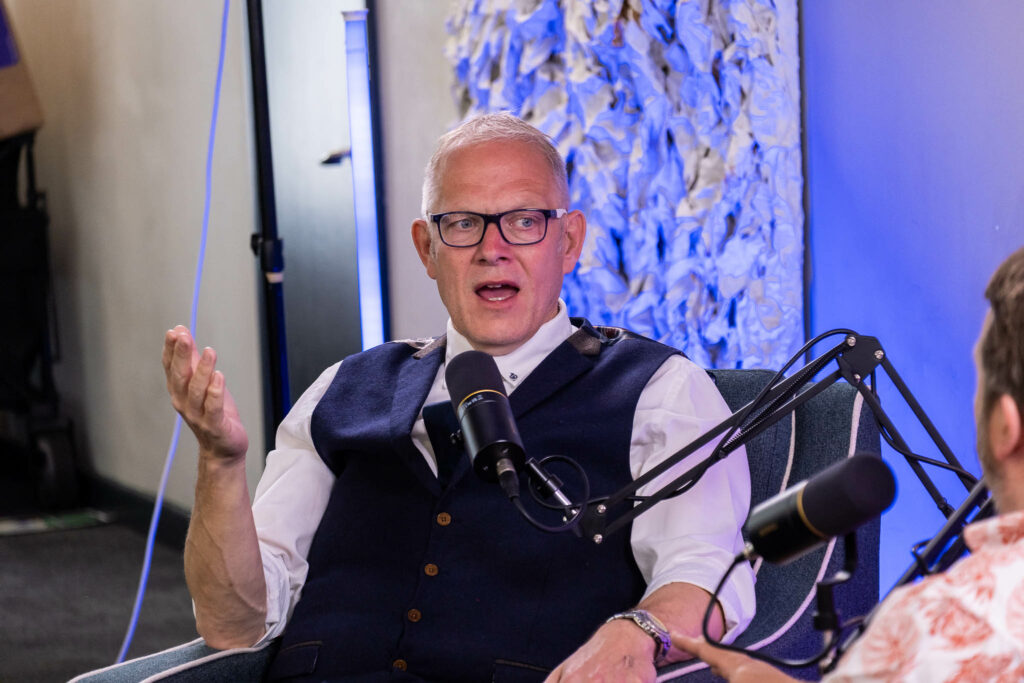
Speaking at the Care Innovators Studio during the Care Innovation Summit 2025, Ian Donaghy – widely known as “Big Ian” – brought a refreshingly honest perspective to one of the UK’s leading care events in London. The summit, which brings together care professionals, innovators and decision-makers from across the care sector, provided the ideal setting for a conversation that challenged assumptions about what innovation in care really looks like.
As a writer, film-maker and long-standing dementia campaigner, Ian does not represent a single organisation or agenda. Instead, he describes himself as an “objective voice in care”, working with everybody and for nobody. That independence allows him to speak openly about what works, what doesn’t, and where the sector risks losing sight of the people it exists to serve.
Care Innovation Goes Beyond Technology
At many UK care events, innovation is often framed through the lens of technology, with AI, digital systems and smart environments dominating the conversation. While Ian acknowledges the value of technology, he is clear that innovation should not be reduced to digital tools alone.
In his view, the care sector currently needs more human attention, he argues that meaningful care innovation often comes from rethinking relationships, communication and everyday practice, rather than only investing in expensive solutions. Innovation, he says, should start with curiosity about people.
Low-Cost Ideas with High Impact in Dementia Care
One of the most striking examples Ian shared came from a simple training exercise in a care home. Staff were asked to write down their individual observations of each resident on large sheets of paper. Every team member saw something different. When those perspectives were shared, a fuller picture of each person emerged.
The result was not only deeper understanding but stronger teamwork. Staff repeatedly commented that they had learned something new about residents they thought they knew well. For Ian, this kind of approach demonstrates how innovation in dementia care and home conferences should be framed: practical, thoughtful and centred on the individual.
Inclusion in action: the ‘Altogether Now’ festival
Ian’s philosophy is perhaps best illustrated by Altogether Now, a music festival he has been running since 2018. Hosted in the car park of a care village in Nottingham, the event brings together people living with dementia, brain injuries and learning disabilities alongside families, staff and the local community.
The space is transformed into a festival environment, complete with a stage, live band and food stalls. Residents choose the songs and perform them live, supported by professional musicians. Wheelchairs become part of the dance floor, and age or diagnosis becomes irrelevant.
Ian describes the event as a “carnival of togetherness”. It is not a symbolic gesture towards inclusion but inclusion in practice. In a sector often discussing dementia environments and engagement, the festival demonstrates how shared experiences can redefine what participation looks like.
Why Innovation Must Be Mindful
Not all innovation, Ian warned, leads to better outcomes. He shared an example of a care home that installed large photographic images of residents’ former front doors on their bedroom doors. While the idea appeared thoughtful, Ian questioned the emotional impact on someone living with dementia.
Opening a familiar-looking door carries an expectation of home: the smells, sounds and sense of belonging. When that expectation is met instead with a small, generic room, the result can be distressing. Ian described this as a failure of empathy rather than intent, highlighting how design decisions in care settings must consider lived experience, not just aesthetics.
Listening to The Real Experts in Dementia Care
A recurring theme throughout the discussion was the need to consult the “real experts”. For Ian, that expertise lies with people living in care and the staff who support them every day. He encouraged designers, suppliers and researchers to spend time in care settings rather than relying solely on theory or academic frameworks.
This approach is particularly relevant as the summit explores the latest research into dementia prevention and care. Evidence matters, but it must be grounded in reality. Understanding what makes people feel safe, comfortable and respected in their own space should shape every decision.
Comfort, Dignity and Everyday Design Choices
Ian also spoke about the importance of comfort, particularly for people who spend long periods seated. He highlighted how furniture choices can either support independence or restrict it. Chairs without arms, for example, can leave people unable to stand safely, reducing autonomy.
These details may seem small, but they have a significant impact on daily life in care homes. For Ian, dignity is found in practical decisions that allow people to move, rest and engage comfortably within their environment.
Addressing The Workforce Crisis in The Care Sector
Looking ahead, Ian identified workforce sustainability as the most urgent challenge facing the care sector. At the summit, he announced a new national campaign titled It’s not just care, it’s my career. The initiative aims to reach schools, colleges, universities and people considering a career change, reframing care as skilled, meaningful work.
By engaging directly with care workers, people receiving care and future generations, the campaign seeks to address the growing staffing gap with people who are motivated by purpose rather than convenience. For care business owners and leaders, this focus on values-led recruitment could shape the future resilience of the sector.
The Vital Role of Dementia Care Conferences
Events like the Care Innovation Summit play a vital role in bringing the sector together. Beyond the formal programme, Ian emphasised the value of informal conversations, chance meetings and shared learning. These moments often spark collaboration and insight in ways no presentation can.
Through the dementia care conference stream, the summit highlighted both innovation and honesty. For Ian, that balance is essential. If the sector can combine technology with empathy, research with lived experience and ambition with realism, the future of dementia care can be genuinely transformative.
For more insights, watch the full interview and book your ticket for Care Innovation Summit 2026.