Date: 3 June 2025
Published: Care Innovation Summit
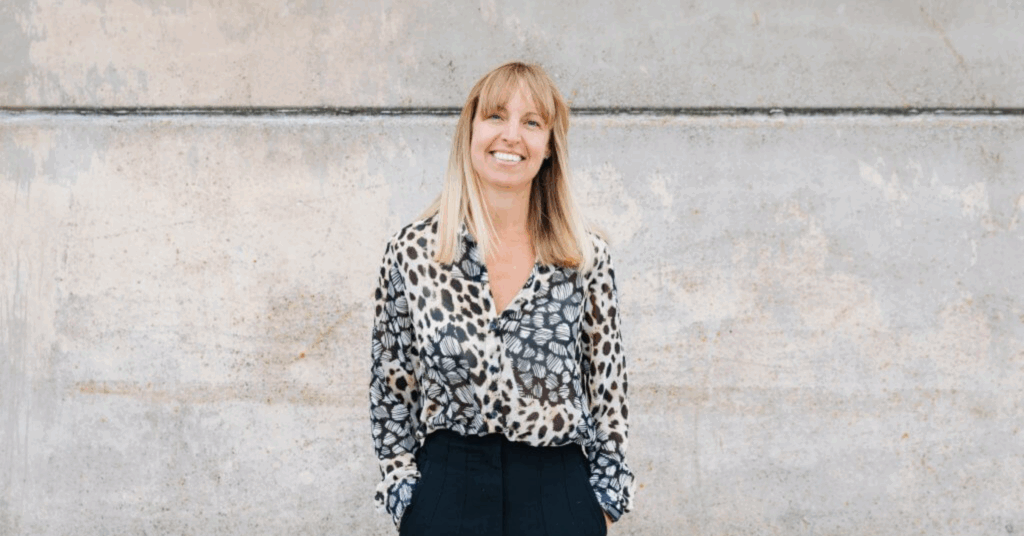
Ruth Brown, COO of Home Instead, brings both professional insight and personal experience to her role. Caring for her mother following a dementia diagnosis has deepened her understanding of the emotional and practical challenges families face. In this interview, she reflects on the power of relationship-led care, empowering local franchisees, and supporting people to live well at home for longer. Read on to discover her thoughts and experiences in full.
Your lived experience as a carer has clearly shaped your approach – how has that journey informed your role at Home Instead?
Ruth: My mother, Marj, was diagnosed with mixed dementia five years ago. Since then I have experienced the roller coaster that is being responsible for, and main family carer of, someone living with this condition, alongside my dad.
Before mum’s diagnosis I thought I knew about care. Yes, I know about the systems and processes, the regulation and why we place such huge importance on recruiting the right people to care – but to have it so close to home and so personal really has had an impact. In my case it’s sad, but also very humbling at the at the same time. To be in my position every day talking about what we do at home instead to then first hand receive and manage the care for my Mum has been quite an experience.
A couple of years back, at a time we we were all feeling quite lost I went to see my mum and found her dancing in the kitchen with her Care Pro. A moment of joy and happiness for her; lost in the moment.
Perhaps the biggest learning has been the impact on the family and the stresses that a condition such as dementia can bring. So I know that we have to focus on the family and those around a client – our support can make a huge difference to their lives.
For my brothers and I, the peace of mind is immeasurable. Mum is happy, my dad is more relaxed and able to take time out. We have been able to make the most of a sad situation. For the family that’s worth more than I can say. We can be children not carers.
What have you learned about empowering franchisees to deliver consistent, values-led care across such a large network?
Ruth: One of the many advantages of a franchise model is that National Office defines the mission and values of the business (and we recruit franchisees against those to ensure a common ethos) but it’s down to individual owners, who are embedded in their local community, to deliver the care. It’s what has allowed us to grow to a network of over 265 offices.
We are very ‘hands on’ in terms of what our model of care looks like, we have an 65-strong team at our National Office who are there to support franchise owners, allowing them to develop local relationships and bring their own personality to their local business.
We set guard rails (that’s the model) and are fiercely protective of these. Franchisees are encouraged and supported to make the business their own at a local level and to flourish. And our model is proven so why wouldn’t they stick to it?
What I’ve learned is that we have to support franchise owners to get the most out of the model and we have to remain connected to the network in terms of open lines of communication.
Each of our owners is assigned a Business Development Consultant who is their point of contact and offers ongoing support based on the life stage and size of the franchise. This is supplemented by a huge amount of support ranging from mentoring and coaching to participation in groups like our Performax groups which bring together small groups of owners operating at a similar level to act as non-execs.
Our Franchise Journey is the roadmap each franchise owner follows from day one. It helps them to navigate their time with Home Instead based on revenue and tenure.
Franchise owners also have access to executive coaching that focuses on both personal and professional reflection to support their growth as a leaders. For franchisees whose businesses are maturing we provide 360 Leadership sessions which encourage them to raise their achievement ceiling.
It’s all about empowerment.
The panel will look at alternatives to drug-based dementia care – how do you see relationship-led care contributing to that conversation
Ruth: I can certainly comment on this as my mother was heavily medicated for a while to stop ‘unwanted’ behaviours whilst in hospital and a care home setting she went to on respite.
The use of medication had started during a hospital stay to stop her from getting out of bed. But, upsettingly, it continued at the care home. I soon realised that all residents were medicated.
My mum was sleeping 16 hours a day with no awareness of what was going on.
When we got her home, supported by the team at Home Instead’s local office and her GP, we slowly reduced the trazadone to a small amount in the evening.
She was receiving live-in care support by this time and her behaviour was managed through 1-2-1 care and she was more engaged. Whilst her dementia was advanced at this stage we could connect with her and there were moments of clarity.
From my personal experience, having the right people with the right training and the right number of people you can offer more bespoke support, this would mean reducing care through medication. Obviously this would mean more money and that’s the issue.
How can care organisations better support families during the early stages of a dementia diagnosis?
Ruth: I think that support during the early stages is really important for setting families up so that they are able to seek the best support and go into this ‘journey’ in the most positive way possible. Sadly, there is a lack of joined up thinking in relation to this.
Families need to have a roadmap. Every dementia journey is different but it is possible to give an indication of what is likely to happen and the type of support options available to them.
People don’t know where to turn and that’s really not helpful and what is a stressful and worrying time. For me, information is vital.
At Home Instead we have created Community Family Workshops which are available to anyone. The content is based on the most relevant extracts from our bespoke Care Professional dementia training. The Workshops help families to navigate dementia, allowing them to have a better understanding of the behaviours that are associated with the condition and how best to manage them.
With our large office network, serving 16,000 clients we say that there are no situations we haven’t dealt with and our teams are always happy to help, advise and signpost.
Speaking to organisations such as Admiral Nurses who have a wealth of knowledge and offer a telephone support service for families can also be very useful.
What role do you think home-based services should play in helping people with cognitive impairment live independently for longer?
Ruth: Home is where people want to be. It’s where they hold their memories and feel most comfortable. Our role is to make sure that they can live well in that environment.
This ties in with the NHS’s long term aim for more care in the community – home care certainly facilitates this aim.
Our role is to work with the client and their families to tailor a care plan that meets their needs. We also need to review that plan on a regular basis and adapt it as care needs increase.
We can offer everything from hourly care to live-in care as well as specialised complex care and ‘hospital at home’.
With the right support in place, we can be there for people with cognitive impairment. This highly personalised care leads to better outcomes for the client and their loved ones. The role of home care is significant.
Ruth will be discussing her experience and work in the Dementia Care stream at Care Innovation Summit, this June. Find out more information and book your conference ticket on our website.