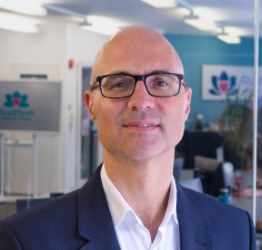
By: Alex Green, Co-Founder, Radfield Home Care
Published: 3rd December 2025
Most people only start looking for social care when something suddenly goes wrong; a fall, an unexpected hospital discharge, or a crisis at home. At that point, families find themselves navigating complex terminology, multiple service types, unclear funding routes, and information scattered across countless sources. Emotions are high, time is short, and decisions often feel rushed.
Inside the sector, we know there is rarely a single “right” answer; good care depends on identity, preferences, medical realities, and family dynamics. But outside the sector, the path to understanding those options is rarely clear. Public portals vary in depth and accuracy; NHS and local authority information is improving but inconsistent, and private providers, understandably, often produce content that explains their services but rarely demystifies the system as a whole. Crucially, clear cost information is still the exception rather than the norm.
The result is predictable; families feel confused, vulnerable, and unsure whether they have made the best choice. And because people delay seeking support until a crisis point, risks escalate; falls, dehydration, malnutrition, and recurrent
infections become more likely. As providers, we see daily how early, high-quality preventative care keeps people safer at home for longer. That is why closing the information gap is not simply a communications challenge; it is a public health priority.
Why every provider must embrace an “educator
first” mindset
If we want better outcomes for people, a more confident workforce, and a more
sustainable sector, we must help the public understand what good care looks like
long before they need it. This responsibility cannot sit solely with government, charities, or overstretched NHS teams. Every organisation that interacts with the public has a role; home care providers, care homes, voluntary groups, community leaders, and local authorities.
When we educate rather than gatekeep, trust grows across the entire system. Informed families ask better questions, participate more actively in care planning, and have more realistic expectations. They understand what different service types can and cannot provide. They feel safer. And they experience private providers not as a “black box” but as transparent, collaborative partners.
For Radfield, this aligns closely with our purpose: helping our nation age well by staying connected to what matters most. Education is not a campaign slogan; it is how we try to show up every day.
One practical example: Local Care Information
Days
One of the simplest ways we have approached this is through open, community-based “Care Information Days.” These are intentionally non-commercial spaces designed to reduce fear, build clarity, and give families the language and confidence to explore support options.
A typical event includes:
● A neutral, trusted venue; libraries, community centres, church halls.
● Short, jargon-free sessions explaining home care, live-in care, respite, dayopportunities, residential care, and nursing; how these services
complement each other; and what “good” looks like in each.
● Clear, myth-busting funding guidance; eligibility, Continuing Healthcare, top-ups, and what self-funding really means.
● No-pressure conversations with trained care professionals about personal
situations.
● Partnership by design; voluntary groups, dementia charities, carer support services, and GP link workers all present so families hear a unified message.
We consistently see three benefits. First, families come to us earlier; they ask proactive questions rather than emergency questions. Second, people
understand the boundaries of home care more clearly, which leads to safer decisions and better person-centred planning. Third, when providers share knowledge without selling, community trust rises across the whole sector.
This approach also reinforces our internal culture. Radfield’s “Be There” movement is about supporting identity, relationships, and purpose; families engage with that message far more positively when they understand that care is something to embrace, not fear.
Education lifts workforce pride too
Public education is not only for families; it shapes how our teams see themselves. When Care Professionals see providers clearly articulating the value of care, challenging misconceptions, and engaging openly with communities, their work
gains visibility and respect. Their role becomes more than tasks on a rota; it becomes enabling someone to stay connected to themselves and the people
they love. In a sector competing intensely for talent, this clarity of purpose matters.
A call for a sector-wide shift
If more of us commit to closing the information gap, families will make decisions earlier and with greater confidence. The public conversation will shift from crisis to living well. The workforce will feel more empowered, and providers across the system will benefit from a more stable, better-informed pipeline of care enquiries. This is not an impossible ambition. It simply requires each of us to take responsibility for education in our communities, share what works, and be open about what does not. At Radfield, we will continue to play our part and welcome
collaboration from others who want to help people stay connected to who they are, who they love, and what gives their day meaning.